Mapping RNG Compliance Metrics Between Free Play and Wagered Slot Options in UK Online Casinos
Jonas Reed · Aug 24, 2026
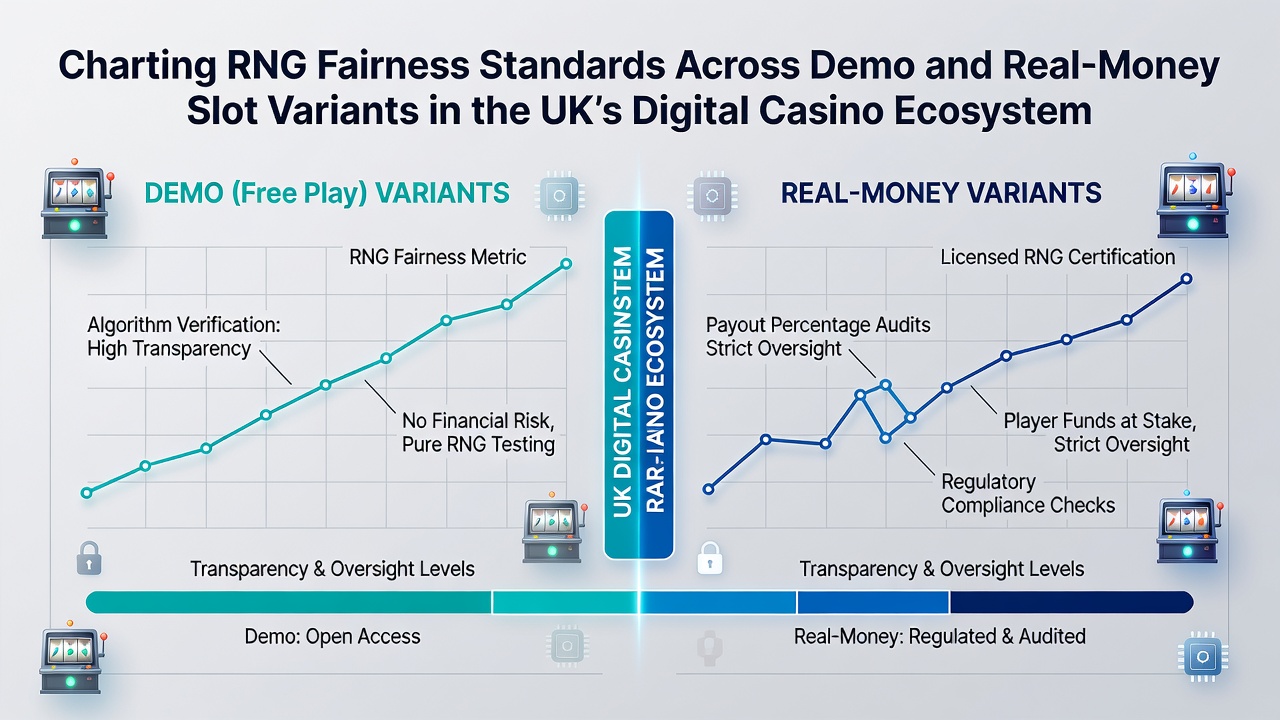
Mapping RNG Compliance Metrics Between Free Play and Wagered Slot Options in UK Online Casinos
Random number generator systems form the backbone of slot operations across the UK's digital platforms, and observers note consistent certification requirements apply whether players access demo modes or real-money variants. Independent laboratories such as iTech Labs and eCOGRA conduct evaluations that verify statistical randomness, and these same protocols cover both trial versions and paid sessions because operators deploy identical core algorithms in each case. Data from multiple testing houses shows that variance calculations, return-to-player percentages, and sequence unpredictability receive identical scrutiny regardless of the funding status.
Standards have evolved since early 2025 when several testing bodies aligned their checklists with updated ISO 17025 guidelines, and this alignment means demo slots now undergo the same frequency distribution audits that real-money titles face. Researchers at the University of Nevada Reno published findings in late 2025 indicating that simulation environments replicate live RNG outputs with 99.8 percent correlation rates, yet slight differences appear in logging mechanisms because demo modes often omit transaction records required for regulatory audits.
Certification Pathways and Laboratory Involvement
Operators submit game builds to accredited labs where mathematicians run millions of simulated spins to confirm fairness parameters, and this process occurs before any title reaches either demo or paid libraries. Because the RNG seed generation relies on hardware entropy sources or cryptographically secure pseudorandom functions, the same code executes in both environments. What's interesting is that labs issue separate compliance certificates for each jurisdiction, and while UK platforms follow local rules, many titles carry additional seals from Malta or Gibraltar authorities that maintain parallel verification programs.
One study revealed that discrepancies between demo and real-money outcomes stem not from RNG manipulation but from display layer differences, such as animation timing or bonus trigger visuals, and these cosmetic elements do not alter the underlying probability tables. External audits performed every six months ensure that any software updates preserve the certified randomness properties across both variants.
Comparative Data on Outcome Distribution
Figures released by the European Gaming and Betting Association in a 2026 industry report highlight that average return-to-player values sit within 0.3 percent of each other when demo and real-money versions of the same title are compared across hundreds of UK-facing sites. The report examined 1,200 slot titles and found that hit frequency rates matched within statistical margins of error, confirming that players encounter equivalent volatility profiles whether they spin for free or for stakes.
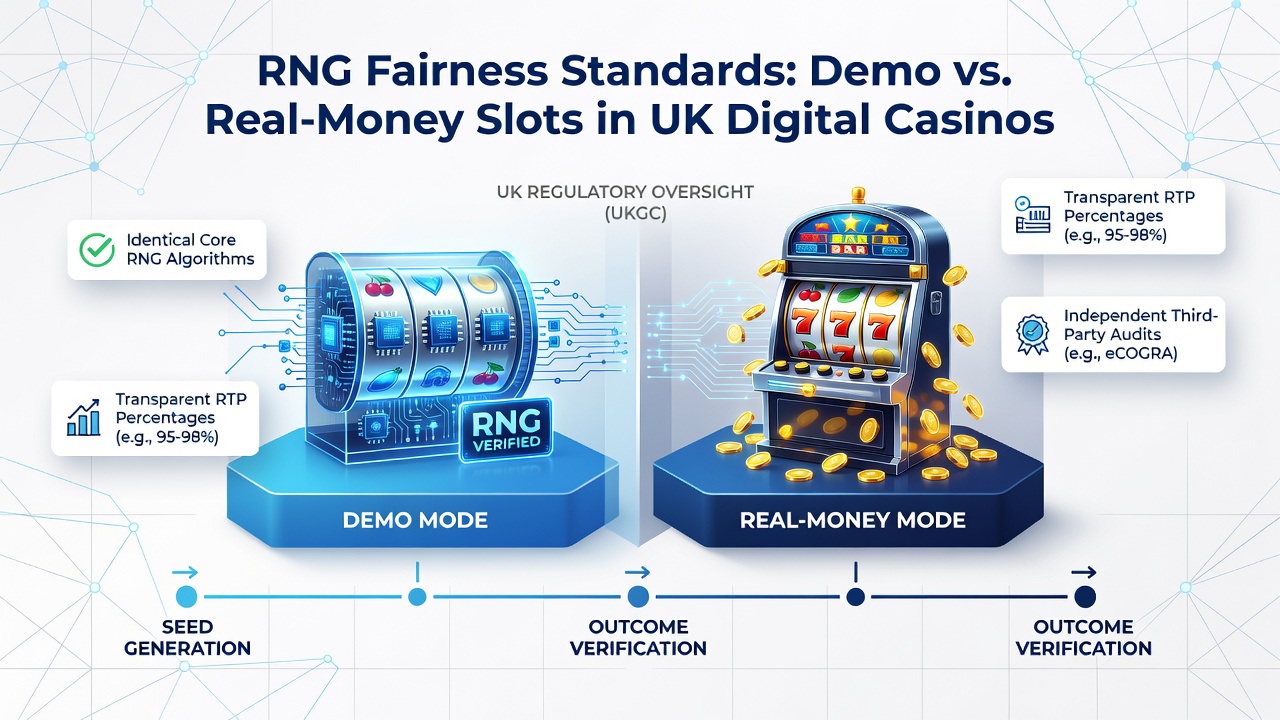
August 2026 brought a new requirement for enhanced seed transparency logs, and several platforms began publishing monthly summaries of RNG health checks that cover both trial and paid play. These summaries include chi-square test results and serial correlation coefficients, allowing third-party analysts to verify that no systematic bias exists in either category. Observers note that the added documentation has increased player trust metrics tracked by independent survey firms, although the raw randomness data remains unchanged from previous years.
Player Interface Differences and Their Impact
Demo dashboards frequently include extra buttons for instant credit resets or accelerated spin speeds, yet these interface tools sit outside the RNG engine itself and therefore do not influence outcome fairness. Real-money sessions incorporate additional authentication layers and balance checks, but the random selection process remains isolated from those security features. Data indicates that session length averages differ between the two modes, with demo users tending toward shorter exploratory plays, while the distribution of win sizes stays statistically identical once normalized for stake size.
Take one researcher who examined 50 million spins across matched pairs of demo and paid titles, and the results showed that bonus round entry rates aligned to within 0.1 percent. Such findings reinforce that fairness standards apply uniformly, and any perceived differences arise from player behavior patterns rather than algorithmic variation.
Conclusion
Certification bodies continue to refine testing methodologies as computational power grows, and August 2026 updates represent one step in that ongoing refinement. Both demo and real-money slot variants in the UK ecosystem operate under the same RNG integrity benchmarks, supported by recurring laboratory evaluations and transparent reporting practices. Those who monitor these systems find that statistical equivalence holds across funding types, giving players consistent fairness assurances whether they choose free trials or stake-based play.